
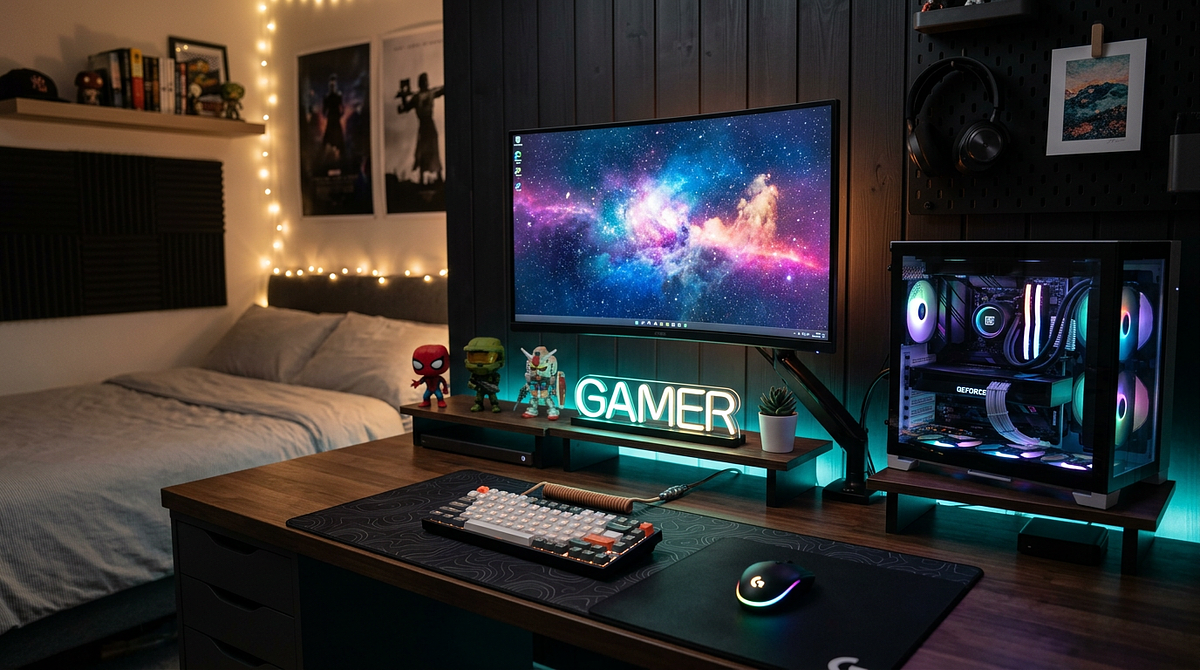
Gaming setup self-expression is about shaping your gaming space to reflect your personality, preferences, and style. This page covers the elements that go into a personalized setup — from lighting and peripherals to desk layout and aesthetic choices — and explains how each one contributes to the overall look and feel of your space. By the end, you’ll have a clear sense of what to focus on and how to make design decisions that feel true to you.
Understanding Gaming Setup Self-Expression and Its Cultural Significance
Gaming setup self-expression is the intentional process of building a physical gaming space that reflects who you are — your identity, your taste, your values. It goes beyond just arranging hardware. It involves deliberate choices about lighting, color palettes, peripheral styles, desk organization, and decorative elements that say something specific about the person sitting there.
This taps into a basic human need for self-definition and belonging. Fandom’s 2024 “Inside Gaming” study found that 80% of gamers feel their gaming identity differs from their real-life identity, with 64% viewing gaming communities as safe spaces where they can be themselves. The physical gaming setup becomes a tangible bridge between those identities — a private space where gamers can express sides of themselves that don’t always come out elsewhere.
The rise of setup personalization mirrors broader cultural shifts in how people relate to their environments. Gaming setups work a lot like social media profiles, fashion choices, or home décor: they’re visible markers of identity that signal your values, interests, and aesthetic sensibilities to yourself and to others.
The Psychology Behind Setup Personalization
Setup personalization taps into several psychological drivers that explain why gamers invest time, money, and creative energy into their spaces:
- Identity construction: Physical spaces help solidify and reinforce your sense of self, letting you externalize your identity through tangible design choices.
- Environmental control: Customizing your own space gives you a sense of agency and mastery in an environment where you have complete creative authority.
- Social signaling: Setup aesthetics communicate membership in specific gaming subcultures and communities, acting as visual shorthand for shared values and interests.
- Mood regulation: A personalized environment that matches your preferences creates psychological comfort and makes the gaming experience feel more natural and enjoyable.
How Gaming Setups Differ From Generic Workspaces
Gaming setups put aesthetic expression front and center in a way standard workspaces don’t. Lighting isn’t just for visibility — RGB lighting, bias lighting, and ambient illumination create atmosphere and reflect personal taste. Collectibles, posters, figurines, and themed décor tell a story about your gaming history and what you care about.
Hardware choices work as both functional tools and aesthetic statements. A minimalist black case signals different values than a transparent RGB showcase. Gaming setups are also often designed with photography and social media in mind, not just personal use — which means they’re built to communicate something to an audience, not just to function well.
Gaming Setup Personality Types and Aesthetic Identities
Knowing your setup personality type gives you a framework for making design decisions that actually reflect who you are, rather than chasing trends that don’t fit. The following types represent the most common aesthetic and philosophical approaches to setup design, drawn from gaming setup communities across Reddit, Instagram, and YouTube.
The Minimalist Pro
The Minimalist Pro values clean lines, functional simplicity, and intentional restraint. Excess is seen as a distraction from both gaming performance and aesthetic clarity. This approach features monochromatic or limited color palettes, little to no RGB lighting (or a single-color accent at most), and cable management treated as a design feature. Negative space is intentional, not just empty.
This aesthetic signals sophistication, maturity, and confidence — you don’t need flashy elements to validate your gaming identity. Minimalist setups tend to appeal to gamers who treat their space as a professional tool, or who want an environment that promotes focus and calm rather than stimulation.
The RGB Maximalist
The RGB Maximalist goes all in on vibrant lighting, bold colors, and visual energy, treating the gaming setup as a canvas for ongoing aesthetic experimentation. Extensive RGB lighting across multiple components creates synchronized effects that shift based on mood, game, or time of day. The goal is visual impact, not restraint. If you want to explore specific products and placement strategies, our guide to building a gaming setup with LED lights covers everything from strip placement to syncing lights across popular brands.
This aesthetic communicates enthusiasm, creativity, and comfort with bold self-expression. RGB maximalists often see their setups as living art installations that reflect their energetic approach to gaming and their willingness to stand out.
The Retro Gamer
The Retro Gamer builds spaces that honor gaming history, incorporating vintage hardware, nostalgic aesthetics, and design elements that reference specific gaming eras or franchises. Think classic consoles, CRT monitors, retro-styled peripherals, and color schemes like beige, woodgrain, or the primary colors of a specific console era.
This aesthetic signals deep gaming knowledge, appreciation for history, and a connection to gaming’s cultural roots. Retro setups tend to appeal to gamers who see gaming as a lifelong identity rather than a current trend, and who find meaning in preserving and celebrating gaming heritage.
The Professional Streamer
The Professional Streamer designs with content creation and audience presentation in mind, balancing personal aesthetic with production requirements and brand consistency. This means a camera-conscious layout, professional lighting, and branded elements that reinforce channel identity.
This aesthetic communicates professionalism, ambition, and an awareness that your setup functions as both personal space and public stage. Streamer setups appeal to gamers who see content creation as a core part of their gaming identity and who care about how their space looks to others.
The Budget Creator
The Budget Creator proves that meaningful self-expression doesn’t require expensive hardware. This approach uses creativity, DIY solutions, and smart spending to build personalized spaces within financial constraints. That means investing in high-impact, low-cost elements like LED strips, desk organization, and wall art, and working with thrifted or repurposed furniture and accessories.
This aesthetic signals resourcefulness, creativity, and an understanding that identity expression comes from thoughtful curation rather than spending power. Budget setups often resonate with younger gamers, students, or anyone who values ingenuity over consumption.
The Connection Between In-Game Customization and Physical Setup Design
The impulse to personalize a physical gaming setup and the impulse to customize an in-game character come from the same place psychologically. When a player spends hours perfecting their character’s appearance in an RPG, or picking specific cosmetic items in a multiplayer game, they’re doing the same identity-building work that drives them to choose specific desk layouts, lighting schemes, or peripheral colors for their physical space.
Research on gaming motivation shows that the same psychological needs drive both in-game and setup customization. Autonomy and control show up in-game through choices about character appearance and abilities, and in the physical setup through choices about hardware, aesthetics, and spatial arrangements. Both give the user complete creative authority over their environment.
Why Gamers Who Customize Characters Also Personalize Setups
The 46% of gamers who cite creation and self-expression as primary gaming motivations are statistically more likely to invest in setup personalization, which suggests these behaviors reinforce each other. Gamers develop aesthetic preferences through in-game customization that naturally carry over into their physical environment. Personalizing both digital and physical spaces creates a coherent sense of identity across contexts.
Creative satisfaction from one form of customization tends to build appetite for similar creative activities. Gamers who participate in customization communities — character fashion showcases, build displays — often show up in setup sharing communities too.
Translating In-Game Aesthetics to Physical Setups
Many gamers deliberately mirror their in-game aesthetic preferences in their physical setups, creating visual continuity between their digital and physical identities. A favorite character’s color scheme might inform RGB lighting choices and peripheral color selection. Game-specific palettes — Cyberpunk neon, fantasy earth tones, sci-fi blues — inspire setup themes that extend the gaming experience into the physical world.
Players of specific game genres often adopt setup aesthetics that match those games’ visual styles. Fantasy RPG players might incorporate medieval or magical elements, while FPS players might lean toward tactical, military-inspired aesthetics. Fans of specific franchises go further, building themed setups with official merchandise, color schemes, and visual references that turn their space into a physical tribute to their favorite gaming universes.
Designing a Gaming Setup That Expresses Your Personal Style
Turning your setup personality type and aesthetic preferences into a cohesive physical space takes some planning. You need to balance your creative vision with practical constraints. The best place to start is getting clear on what you want to express, then working backward to figure out which specific elements communicate that identity effectively.
Establishing Your Setup Vision and Core Aesthetic
Before you buy anything or rearrange your space, define the specific identity or feeling you want your setup to communicate. Pick 3-5 adjectives that describe your ideal setup — words that capture the atmosphere you’re going for, like “focused,” “energetic,” “nostalgic,” “professional,” or “cozy.” Collect visual references by building a folder of setup photos that resonate with you, and note the specific elements that appeal to you: lighting style, color schemes, organization approaches, decorative choices.
List the functional requirements your setup must meet — monitor quantity, desk space for specific activities, storage needs, ergonomic requirements. Then set realistic constraints by establishing your budget range, available space dimensions, and timeline for getting it done.
Budget-Tiered Approach to Setup Personalization
Setup personalization works at every budget level when you focus on high-impact elements and phase things in strategically:
| Budget Tier | Priority Elements | Expected Impact |
|---|---|---|
| Under $100 | LED strip lighting, cable management, desk organization, wall art | Immediate visual transformation and aesthetic direction |
| $100-$500 | Quality lighting setup, upgraded peripherals, desk upgrade, decorative elements | Elevation from basic personalization to cohesive aesthetic statement |
| $500+ | Premium peripherals, advanced lighting systems, custom PC modifications, furniture upgrades | Polished, photography-ready results with professional-level cohesion |
Common Setup Personalization Mistakes and How to Avoid Them
Learning from common pitfalls saves money and prevents aesthetic dead-ends. Copying popular setup styles that don’t actually reflect your preferences or gaming habits is a common trap. Before each purchase, ask yourself whether the element represents something meaningful about your gaming identity.
Neglecting cable management undermines even expensive aesthetic investments — visible cable clutter destroys visual cohesion. Set aside 10-15% of your setup budget specifically for cable management solutions and treat it as a design feature, not an afterthought. If you’re not sure where to start, our beginner’s guide to gaming desk cable management walks through product options and routing strategies at every budget level. Ignoring lighting fundamentals creates harsh shadows, screen glare, or a washed-out appearance in photos. Apply basic three-point lighting concepts even with budget solutions.
Accumulating too many decorative elements creates visual chaos rather than intentional aesthetic. Edit ruthlessly by removing items that don’t actively contribute to your core aesthetic vision. And don’t sacrifice ergonomics for appearance — a beautiful setup that causes physical discomfort becomes unsustainable fast. Set ergonomic baselines for monitor height, chair support, and keyboard positioning before adding aesthetic enhancements.
The Social Dimension of Gaming Setup Culture
Gaming setup personalization doesn’t happen in a vacuum. Sharing, validation, and community belonging all play real roles in motivating and shaping design decisions. The rise of setup sharing culture across Reddit, Instagram, TikTok, and YouTube has turned gaming setups from private functional spaces into semi-public identity statements built for community consumption and feedback.
Why Gamers Share Their Setups
Setup sharing reflects several psychological and social motivations. Gamers post setup photos to receive community affirmation that their aesthetic choices and creative efforts have value. Positive feedback reinforces identity expression and encourages continued investment in personalization.
Sharing a setup signals participation in gaming culture and specific subcultures. Setup posts function as introductions and identity declarations within online communities, creating a sense of belonging and shared purpose. Photography and videography become creative outlets in their own right, building both design and documentation skills.
There’s also a reciprocal economy of inspiration at work. Sharing your setup contributes to a collective knowledge base that helps others solve design challenges, while community feedback gives you specific suggestions for improvement and refinement.
How Social Media Influences Setup Aesthetics
Each platform shapes which setup styles get visibility and which design trends take hold. Reddit’s upvote system rewards setups that photograph well and show a clear aesthetic vision, with community-specific preferences setting informal standards. Instagram’s visual-first format favors setups with strong compositional elements and color harmony, while hashtag communities create aesthetic subcultures with distinct preferences.
TikTok’s short-form video format puts transformation narratives front and center — before-and-after reveals, budget builds, DIY projects. The algorithm rewards novelty and creativity, which pushes experimental approaches. YouTube’s long-form setup tours let creators explain their design choices and product selections in detail, while tutorial content makes advanced techniques like custom cable sleeving and lighting programming accessible to more people.
Setup Aesthetics as Community Signals
Specific aesthetic choices act as visual shorthand that communicates community membership and shared values. Minimalist setups signal maturity and sophistication within gaming culture, a preference for function over flash, and a connection to productivity communities. RGB maximalist setups communicate enthusiasm and an unabashed embrace of gaming culture, technical knowledge, and membership in PC gaming communities specifically.
Retro setups signal deep gaming knowledge and historical awareness, a collector mentality, and a connection to specific gaming eras. Streamer setups communicate content creator identity and professional aspirations, an understanding of production values, and participation in streaming communities. For a deeper look at how dedicated streaming spaces are designed and organized, the streaming room ideas guide covers layouts, lighting, and background composition across different budgets.
Creating an Authentic Gaming Identity Through Your Setup Design
Gaming setup self-expression works best when your physical space genuinely reflects who you are as a gamer, not just what’s trending. The most meaningful setups come from honest self-assessment about what matters to you, followed by thoughtful choices that respect both your vision and your constraints. Start by identifying your setup personality type, then make incremental changes that move your space toward that aesthetic vision. Setup personalization is an ongoing process — your space should evolve as your gaming identity develops and your circumstances change. Focus on high-impact elements first, then layer in refinements as budget and time allow.
Frequently Asked Questions About Gaming Setup Self-Expression
How much should I budget for personalizing my gaming setup?
Meaningful personalization starts at $50-100 for foundational elements like LED lighting and cable management, with $200-500 achieving substantial aesthetic transformation through upgraded peripherals and lighting systems. Budget allocation depends on your goals — lighting and cable management deliver the highest visual impact per dollar spent, while premium peripherals and furniture are longer-term investments that combine functionality with aesthetic value.
Can I personalize a gaming setup in a small space or shared room?
Small spaces benefit from vertical storage solutions, wall-mounted elements, and compact lighting that creates visual interest without eating up floor space. Shared rooms can work with portable decorative elements and headphone-based audio to maintain personal expression within constraints. Focus on elements you can easily adjust or remove, like LED strips, desk organization systems, and wall art that doesn’t require permanent mounting.
How do I choose between different setup aesthetics if I like multiple styles?
Build a hybrid approach by picking one style as your primary aesthetic (60-70% of design elements) and pulling in complementary elements from secondary styles (30-40%). Make sure your color palette stays consistent throughout — that’s what ties the combination together and keeps the space from feeling disjointed. Test combinations through mood boards or digital mockups before committing to purchases.
What’s the fastest way to make my gaming setup look more personalized?
Install LED strip lighting behind your desk or monitor for an immediate visual transformation — this typically costs $15-30 and takes about 30 minutes to install. Follow that with cable management solutions that eliminate visible clutter and create clean lines. These two changes deliver the highest visual impact with minimal time and financial investment, and they establish a solid foundation for additional personalization.
Should I match my gaming setup aesthetic to my in-game character customization preferences?
Matching aesthetics creates satisfying continuity between your digital and physical identity, but only if your in-game style genuinely reflects your real preferences rather than temporary experimentation or meta-gaming choices. Ask yourself whether your character customization represents authentic self-expression or practical gameplay decisions. If it’s the former, translating those aesthetics to your physical setup can create meaningful coherence.
How do I photograph my gaming setup for social media sharing?
Good lighting and a clean space do most of the heavy lifting. Golden hour light or three-point lighting eliminates harsh shadows, while RGB elements and a slight overhead angle bring the setup to life. A wide aperture draws focus exactly where you want it. If you’re still building the setup worth photographing, exploring curated gaming desk ideas can spark your next upgrade.